Showing posts with label Xeno-Meso. Show all posts

Wednesday, January 1, 2014

Dollar Store Dungeons: Serpent-Tapirs


The enormous Serpent-Tapirs aren't native to the Sixth World; they are survivors of the worlds destroyed in past ages. Because their stride is like thunder, they are favored by gods associated with fire, thunder, and lightning, including the fearsome Django-Tlaloc of the Olmeca.

In ancient times, the lords of the Forest of Kings made war on each other's city-states astride these great beasts. Today, only a few of the Mayan city-states still have a Serpent-Tapir. Those who do no longer use their beast for warfare but instead to clear jungle and forest areas and ready them for agriculture. After all, the creatures' enormous bodies give them enormous appetites. And the Serpent-Tapirs not only clear land; they fertilize it as well with their prodigious amounts of excreta. 

The Olmeca have four of the beasts which they use for warfare. From enormous war-howdahs astride these beasts, the Olmeca archers and spearmen can rain down iron-tipped death on their enemies, or use great grapple hooks to tear down the steep stone walls of a fortress or city. The mere threat of these creatures is sufficient to keep the tribute flowing from Xochiquetzatlan and the city-states of the Maya folk into the coffers of the Olmeca king.

Unfortunately, the Olmeca are dependent on others to heal these great beasts when they fall ill; the Olmeca retain healer priests from the Forest of Kings for just this purpose, as they have a great deal of ancient lore on care of the Serpent-Tapirs. Another problem the Olmeca have is that the beasts do not breed well in captivity. The Olmeca have sought the help of the sorcerer-priests of the ever-fecund city of Xochiquetzatlan to devise a magical remedy for this problem. 

The Olmeca are pursuing other alternatives as well. One is to summon Serpent-Tapirs from the stone-bones of their kind who perished long ago. Discovering these often requires lengthy and expensive rock hunting expeditions to the deserts, hills, and badlands of the great continent to the north, as well as the cooperation of the few sorcerers among the Xochiquetzatlani and Maya who know the ancient summoning spells. 

Finally, the Olmeca are also commissioning Serpent-Tapir egg hunts in the jungles in the deep south of the isthmus, and to the great southern continent beyond there. Their shamans have had visions of large herds of the beasts still alive in the wilds of these far lands... 

This post is part of the cross-blog community project Dollar Store Dungeons. It is but one example of how a $1 plastic dinosaur - and a plant eater at that - can be put to good use as a gaming prop and inspiration for world-building. Other uses for this beastie might be in games of Hollow Earth Expedition, Rocket Age, or the forthcoming Ubiquity game system implementation of Space: 1889. We know that both the Hollow Earth and Venus have creatures like these. Hopefully humans do not hunt them to extinction.


Tuesday, December 31, 2013

Dollar Store Dungeons: Creatures


If you are going to run a game of Heirs to the Lost Worldthe New Fire, or are planning a Xeno-Meso or Hollow Earth Expedition adventure, you'd do well to pick up a $1 bag of creatures from the local dollar store. The Aztec and Mayan Underworlds are filled with bug-like creatures - especially centipedes. You may actually want a few bags of them.


For example, on Saturday, I played in one of Jeff Berry's wonderful Tekumel miniatures games where a big collection of bugs from dollar stores came in quite handy. I was playing a high-level priestess of Ksarul, up in the howdah of one of these wonderful Sro dragons:


At a certain juncture in the battle, it became necessary expedient amusing to summon some of Lord Ksarul's spider-like demon servitors in order to dispatch some of the Pe Choi and Shen who were harassing us. I didn't do too well on the roll, so Jeff told me I had summoned 13 demons who were not spiders. So out of the huge bug supply box came all kinds of other demons: centipedes, ticks, beetles, scorpions, a dragonfly, even a squid (freshwater/ambulatory/arboreal).

So don't leave home without your dollar store demons!


Friday, October 4, 2013

Smoke From The New Fire


Readers who know of The Everwayan's involvement with the Heirs to the Lost World RPG, and our own Xeno-Meso setting will not be surprised to learn that we keep a vigilant eye open for other Mesoamerican-inspired RPGs.

Over the last year, we've been very intrigued by the tell-tale smoke from the New Fire, an Aztec/Mesoamerican RPG recently released and now available in PDF and different print formats through DriveThruRPG. The New Fire's PDF is simply beautiful, and we are looking forward to the arrival of our copy of the full color hardcover.

I find reading PDFs much more challenging than books, but I have been flipping around in my PDF copy while I wait for the book. This game is clearly written by someone who has learned a great deal about Mesoamerican culture and has thought through how to make an Aztec-centered game that is faithful to the source material, respectful of contemporary Nahuatl speakers, and an interesting set-up for roleplaying adventures.


Here is the most in-depth review of the game I have found so far. If you go to the New Fire website, you can also connect to the game's Facebook page, which is the most active online community for the game.


We'll have more to say once the hard copy arrives and we have a chance to digest it!

Friday, July 26, 2013

On Bad Lands And Ruined Cities


A day's walk to the southeast of the Black Hills, rolling green prairie suddenly cuts open into a multicolored abyss of sand, rock, and scrub. It's easy to miss, even though The Waste goes on for miles and miles. The Waste hides in plain sight within the prairie. If your scouts come back to you after they find The Waste, keep them in your party. They are trustworthy and doing their job.

Many seek their fortunes here amid the rocks and ruins. Few return, as the hills, cliffs, and caves are extremely brittle. Sudden collapses are the norm. And there are other dangers.

At first sight, The Waste appears to be an unusual and very hostile land feature. Sometimes it is beautiful; at other times it is menacing and sinister. The Waste's coloration and appearance changes throughout the day, with different qualities of light and shifts in the weather.

Some tribes hunt here for game. You often see pronghorns on the cliffs, and there are rabbits, snakes, and other game - as well as stranger creatures - living mirages - that appear and strike from thin air.

But spend time looking at the cliffs, and you will see why strangers come here. The Waste is an ancient ruined city, blasted by the gods for some horrible sin committed in times long-past. The Waste may once have been one giant city, miles across, with walled cantons for different clans. Or perhaps the "city" was in fact a cluster of walled villages, temples, and citadels. Between the walled areas were carefully tended commons for hunting and gathering, as well as farm lands cultivated by specific walled village compounds or city precincts.

The pattern would have been:

walled compound - farm lands - wild commons - farm lands - walled compound

The Waste's original inhabitants may have been distant ancestors of the Xeno-Meso peoples in the far south. Clan-based city builders, mound builders, kiva, ball court, and temple builders. Players of games - from ball games to flower wars.

They sacrificed millions in their temples. Once you discover the Chopped Bones, the vast subterranean ossuaries where the bones of their sacrifices were dumped, you will see and believe.

Delvers from as far away as Xeno-Meso have discovered many treasures and horrors within and below the ruins. Subterranean tunnels and mazes extend for miles under the ruins, crumbling crawlways filled with death and wonder. There are gates here, too.

Photo copyright 2013 by John Everett Till.

Tuesday, July 16, 2013

It's All About The Attitude!

Photo copyright 2013 by John Everett Till

This is an example of the extraordinary ceramic art from the exhibit "Ceramica de los Ancestros: Central America's Past Revealed" the new exhibit at the Museum of the American Indian in Washington, D.C. The exhibit features the art of Guatemala, El Salvador, Honduras, Nicaragua, Costa Rica, and Panama.

The Central American region, with the exception of Guatemala, is usually underrepresented or completely ignored in popular discussions of the archaeology and cultural history of the ancient New World. This is tragic, as the region had an incredible material culture, combining aspects of Mesoamerican Aztec and Mayan cultures with those of other groups such as the people of the Nicoya region.

The Aztecs and Mayans had cultural outposts in the zones south of Guatemala. But as far as we know, there weren't huge empires here, as in Central Mexico. The pattern was more one of villages with chieftains, known as caciques.

Unfortunately, the Museum did not have a catalog for the collection, so I can't tell you for sure what animal the creature above is meant to be represent. It looks like a badger, but I believe it is an agouti, a pretty common rodent of Central and South America, which is often represented in art of the Central American region.

But it sure has attitude.

This insouciant creature could have been a Mayan lord!

I'll be sharing more pictures from the exhibit, as the images are getting the creative juices flowing about the region south of The Forest of Kings in my Xeno-Meso setting!

Friday, June 28, 2013

Museum of the American Indian

Heading to the Museum of the American Indian in DC this afternoon, once my conference ends. I have been to its new location once before, about two years ago.

I visited the original museum space up in the Bronx many years ago (on my first trip to NYC back in the 80s in fact); the exhibits were incredibly dense displays, with little context. Several years ago, i went to the museum's new satellite space near Battery Park. It was a pale shadow of the museum's former glory, although at the time we were there they had a great exhibit on South American shamans and the hallucinogens they used.

The new museum site in DC is an incredible space - a fitting, spacious, and architecturally appropriate home for sharing the museum's collections and for people to actually learn and experience the history and current cultures of the native peoples of the Americas.

At least one of the current exhibits deal with ancient Central America - right up my alley given my current Xeno-Meso project. More to come after the visit.

Monday, June 17, 2013

The Bear Hill in Xeno-Meso

Bear Butte, SD

To the northeast of the Black Hills, the plains dip into Iron Horse valley, which then begins to rise again into rolling hills. These hills are riddled with gates. Go a bit further to the east, and look north. You will see the Bear Hill.

The Giving Hill rises high above a windswept green plain. Buffalo rest and graze in the mountain's foothills. Pines rise all the way to its top, although much of the mountain looks bare from a distance. Get a glimpse of it, and it will call to you. To arrive is to know you are in a special place.

More than one prophet has found his or her calling here. The different peoples of the plains make their journeys to the Bear Hill to pray, meditate, and leave offerings. Many of these prayer bundles and cloth strips are tied to trees at the base of the mountain; others are left at the mountaintop. Peace treaties can be negotiated here - if the parties are really prepared to make peace.


Photo copyright 2013 John Everett Till.

Wednesday, June 12, 2013

Aquatic And Marine Hazards In Xeno-Meso

Marines stand ready for a boarding action!*

Yet another picture from the "Saving Serqu's Sisters" Braunstein naval miniatures event last Saturday at Fantasy Flight Games Event Center!  All of that naval action and the various (carnivorous) flora and fauna have gotten me thinking about wildlife in the Xeno-Meso setting, and what aquatic and marine horrors may exist in that world.

In the lake surrounding Xochiquetzatlan, there are a number of giant turtles that look like this:

Black Hills Institute

For the most part the turtles busy themselves feeding on fish. Large fish. In fact, many of the fish in the lake are armored. But wise persons swim with care, and watch their children in the lake.

Any fisherman worth his salt knows the proper baits to attract a number of these large creatures. A few brave (or foolhardy) youth have become popular because they have taken up the sport of shell-hopping. Once baited, the turtles congregate, and youth compete to see who can go the farthest leaping from shell-to-shell.  An accidental slip and fall can easily lead to losing a limb or worse to a hungry turtle.

Many hazards to marine navigation exist in the form of sea creatures that look like this:

Plesiosaur, Museum of Geology,
University of South Dakota School of Mines and Technology
As well as this:

Mosasaur, Museum of Geology, USD-SMT

But things get really bad in the lake surrounding Xochiquetzatlan when you see something like this:

Prehistoric Crocodile, Black Hills Institute

Thanks to Carlos the human and to the Anubian Ambassador who posed to give us a proper size contrast. 

Fortunately, these large crocodillians are quite rare, although the smaller varieties are quite abundant. The presence of large crocodillians is usually the result of sorcerous activity, including improperly dispelled gate castings. Priests and priestesses of Lord Tlaloc and Lady Chalchiuhtlicue have the power to summon these beasts from the watery otherworld of Tlalocan.

Pity the peasant who has the misfortune to have one of these monsters escape their masters and clamber up onto their chinampa.


*All photos copyright 2013 by John Everett Till

Tuesday, June 11, 2013

Buffalo Head

Buffalo Head, photo c. John Everett Till

Far to the north of Xochiquetzatlan, the great continent widens into a vast land called Turtle Island. There, the continent is divided by the Great River, along which the people of Cahokia have built their towns, cities, temples, and burial mounds. North of the Cahokians, prairie lands unfold in all directions.

Keep going north, but head west, and eventually the prairies give way to a dense circle of mountains. There are mountains within mountains, and riverine valley trails run between them. The local tribes call these mountains the Black Hills, because pines make the mountains' slopes look black. There are rocks and minerals everywhere - gold, quartz and much, much more. It is as if the gods of Earth disgorged their treasuries here.

This entire land is sacred to the peoples of the north. Few live in the Black Hills but many come here to experience the spirits and have visions. One can easily step into the spirit world here, go on HeroQuests, and relive (and sometimes alter) the myths of one's ancestors.

One of the many sacred places here is the Buffalo Head, a mountain whose peak resembles a bison.

It is said that a buffalo god touched down here, and left the shape of its head. At that same moment, the faces of the Nameless Autarchs cracked, crumbled, and cascaded into the abyss of granite shards below the faces. After praying below the Buffalo Head, many descend into the Valley of Fallen Faces to wonder at the broken faces of these lost and forgotten kings.

Thursday, May 30, 2013

Petty Gods In Xeno-Meso

Pottery from Esteli, Nicaragua
Photo © 2013 John Everett Till
Good poets borrow, great poets steal. The best sourcebook for gaming is often reality. The primary reference for the major (and many minor, petit, or petty) gods in the Xeno-Meso setting is this work right here:


Many of the deities of the peoples of Xochiquetzatlan (quasi-decadent Aztecs), Olmeca (Mesoamericans of African descent), and the Maya in the Xeno-Meso setting are taken right from this book. However, like any GM I also like to create/extrapolate my own creations. And Gorgonmilk's Expanded Petty Gods project seemed a perfect opportunity to do just that.

The Original Petty Gods book came out this summer, and can be downloaded here. The Expanded Petty Gods project where my deities will be featured is forthcoming this summer. I have submitted three deities, three minions, and twelve magical items for this community project.

Two of my deities will be illustrated by the incomparable +Juan Ochoa, whose website is here. Juan is also illustrating the Titzimine, or Star-Demons, which are one of the minion races  created.

Another of my deities is being illustrated by +j garrison of Hereticwerks; regular readers of The Everwayan know I am a huge fan of Jim's writing and art and it was a great to be able to work with him on the art for one of my gods.

All of the deities, minions, and items that I created will fit-in extraordinarily well with the Xeno-Meso setting, as well as with other Mesoamerican settings. I imagine they can be adapted for a variety of other settings, particularly those that use a broader cultural palette than Western and Northern Europe.

Our creations will be of particular interest to people who enjoy combining planetary romance and pulp SF influences with their fantasy settings. Sorcerers using the spells of Space-Age Sorcery will find worthy allies, adversaries, and artifacts among our submissions.

So who are the deities? I'll wait until XPG comes out to provide all the details, but here are a couple of them:
  • Chicxulub, the Petty Goddess of Decaying Orbits
  • Wicked Skein, the Petty Goddess of Unwelcome Messages

Tuesday, May 28, 2013

Strangerside Scholar: The Seven Unlucky Spherewalkers


Although the Sphere of Xeno-Meso is very far away from Everway, The Paddlers are not the only Everwayans to have visited the Sixth World. According to the scroll-book Things Seen In the Obsidian Mirror by Lightning Diviner Crookstaff  (and from the title we assume you can guess the name of the book's author), seven other Everwayans have visited that Sphere.

Apparently, none of them returned.

Instead, the scroll-book tells us they became Petty Gods among the peoples of the Sixth World.

Mr. Lightining Diviner Crookstaff's cursive is quite crabbed, and consequently his scroll-book rather difficult to read. But we are slowly making progress with the text.

In time, the Strangerside Scholar will have more to say about these unfortunates.

Sunday, May 26, 2013

The Paddlers Have Plans

"The Paddler Gods" by David Nathan Allen
http://dnamaya.tumblr.com/image/14609518331

The Paddlers arrived in the Sixth World through a sea gate known as the Blue Hole. They arrived with three of their pyramidal battle barges - The Black Ziggurat, The Lucre Ark, and The Sea Lion - and a hundred great canoes. They soon made friends and formed a firm alliance for trade and protection with the lords of realm of city-states known as The Forest of Kings. This was very much a game-changer for the Olmeca, who have experienced a loss of tribute and influence in the more southern extents of the Mayan lands.

With the consent of the Mayan lords, the Paddlers have built a harbor and shipyards on the Mayan holy island of Cozumel. The Lucre Ark guards the harbor, which is the Paddlers' new home. Sacred to the Moon Goddess Ix Chel, and ruled by its priestesses, the island felt like the just right place for the elders of matriarchal Paddlers to make their new home. Here on Cozumel, they could build new fleets, plan new expeditions of trade and exploration, be fertile and multiply.

The Sea Lion stands watch at the very tip of the Yucatan. Now the Olmeca dare not approach Cozumel by sea. The Sea Lion has an escort of 15 great canoes. Another 20 use The Sea Lion as a trade base for expeditions to establish trade relations with the islanders of the Near Sea to the east.

Meanwhile, The Black Ziggurat is nowhere to be found. She left Cozumel a month after the Paddlers arrived there, setting out on a secret mission with an escort of 15 canoes. Some say she has headed to the East across the great ocean; others say she goes far South.

Sunday, May 19, 2013

Django-Tlaloc In Xeno-Meso

The man Django rides becomes a conqueror

An ancient Olmeca king deified in the times before they crossed the ocean, Django was the ancient god of fire, lightning, and thunder. As the violent king, he constantly expanded his empire through endless military campaigns and battles. Because of his bloody-minded focus and discipline, many today pray to Django for a strong will and self-control. Those whom Django rides become conquerors; they conquer themselves, and they conquer others.

A double headed stone ax is his symbol. Django chooses a champion by striking them with his lightning; look for the tell-tale scars on the flesh of the mighty. He casts lightning by hurling down stones from the sky. The tell-tale signs of his lightning strikes are often found on the earth after rains clear. These thunder stones are sacred to Django, and are often found in his temples and shrines.

Photo of Tlaloc by El Comandante
(*Full Attribution Below)
The Olmeca recognize the local deity Tlaloc as an aspect of Django. Tlaloc is the Xeno-Meso god of thunder and lightning, rain, water, fertility, and agriculture. His form is part lizard and part jaguar. He has the goggle eyes of a lizard and the teeth of a jaguar. Mountains are sacred to Lord Tlaloc, as this is where the thunder comes from.

Olmeca warriors, nobles, and aspiring kings worship the human, black-skinned, kingly aspect of Django-Tlaloc. In contrast, Olmeca peasants revere the deity's scaly aspect as the lightning-bringer whose storms renew the soil's fertility through fire and rain. Of course, the Olmeca's rulers and priests ignore another aspect of Lord Tlaloc at their peril. Lord Tlaloc also extinguishes fire - the fire of life - by drowning. This is something the other peoples of Xeno-Meso never forget.

*Mask of Tlaloc, nahua god of the rain (National Museum of Anthropology and History in Mexico City - Teotihuacán hall).

Wednesday, May 8, 2013

Ogun In Xeno-Meso

http://www.7-angeles.com/ogun.html

Among the spirit-beings or deities that the Olmeca brought with them from the old world, the deity Ogun stands out fearless and unchanged among his peers. His iconography is the same as the day the Olmeca arrived in the Sixth World. He cannot be mistaken for or combined with any native deity of Xeno-Meso. This purity of blood is one of his aspects.

Ogun is a smith-god, and iron is his supreme metal. Only the Olmeca have mastered the art of ironwork in the Sixth World. That's why Ogun's innermost secrets and truest magics are kept by the Olmeca smiths.

As a god of war, here too Ogun stands without peer. Other war gods get out of his way, lest they be bested by him and become Petty Gods.

While all war-gods should be feared, some are more fierce than others. While deities like Huitzilopochtli can deliver the deft, quick slashes that make blood flow, Ogun delivers blows that shatter bone or cleave a person in two. While Huitzilopochtli is the graceful, gallant - perhaps even flashy - opponent, Ogun is the boisterous, boastful war god who never backs down, and delights in making even the bravest warrior turn and run like a coward.

He also drinks, smokes, and womanizes.

He can pull miracles out of his pockets.

He can slay the dragon-gods of Xeno-Meso.


Monday, May 6, 2013

The Ballgame in Xeno-Meso

http://sites.matrix.msu.edu/anp203h-ss12/
2012/03/27/mesoamerican-ballgame/

A T-shaped court. Two teams. A bruisingly hard rubber ball. An impossibly small vertical hoop. The game is played in towns and cities across the world of Xeno-Meso. While other sports exist in the Sixth World, including wrestling, boxing, and ritual combat, the ball game is the most popular sport among all classes and peoples.

http://www.mexicolore.co.uk/aztecs/aztefacts/oh-balls

In the olden times, the losing team in a game could be sacrificed. The Olmeca brought about an end to that practice, considering it ignoble and unsporting. Today, communities form teams to represent themselves in competitions that cross cities and span nations. The most successful teams go on to compete with those of other states.

Each year, a series of finals is held in one of the Mayan cities; this series of contests chooses the best team among all the contending states and communities. A great deal of wealth is expended in the competition to host these games, and the Olmeca arbiters grow ever wealthier from the many offerings and bribes taken from the contending Mayan lords for the right to host the games.

http://barrickmuseum.unlv.edu/families/
maya/mesoamerican-ballgame.html

Today, the many ball teams and their athletes are the celebrities of the Sixth World. Teams play against each other for the prestige of their communities, for wealth, and their choice of mates. While among the Olmeca and the Maya teams are composed exclusively of men, among the more egalitarian folk of the great city of Xochiquetzatlan, the women's teams are even more popular than the men's.

Typically, when Xochiquetzatlani teams play in Olmeca and Maya lands, gender mixed teams are sent. While this always causes some scandal among the Olmeca and Maya, they have grown to respect the Xochiquetzatlani teams; they are quite competitive, even with the all-male teams of the other states.

Sunday, May 5, 2013

The Olmeca In Xeno-Meso


The black-skinned Olmeca rule the lands southeast of great city of Xochiquetzatlan, and collect tribute from many towns and villages from Xochiquetzatlan in the northwest well down into the small tribal villages of the Ithmus between the two great oceans. The Olmeca arrived from over the eastern ocean in great ships carrying hundreds of warriors. Armed with iron-tipped spears and swords, their warriors were unstoppable. The native defenders had little chance against these weapons, let alone against the fearsome new spells of Olmeca's terrible masked magicians, priests, and griots.

The Olmeca established their own great state, took native women as their wives, made slaves of their weak and newly conquered foes, and built new towns, cities, palaces, and temples on top of the old. These days, the Olmeca empire is not so much expansionist as extortionist. The Olmeca demand that the lords of Xochiquetzatlan and the surrounding lands hand over tribute in order to avoid wholesale death, enslavement, or even worse - ensorcellment - at their hands. No one wants to be come a spell-slave in one of the Olmeca's masked sorcerer-societies.

All the great Maya folk of the peninsula used to pay tribute to the Olmeca, until their new allies, The Paddlers, arrived through the sea gate. The Maya communities closest to the Olmeca homeland continue to pay their full tribute, while the Mayan towns and city-states further south and east now make only symbolic tributes. This has heightened resource conflicts among the Olmeca elites, and many fear that war - either civil war or war with the more independent Maya states is inevitable.

The Olmeca have been in the Sixth World for several generations. The blood of their leaders has not grown too diluted, because their priests carefully arrange and approve all marriages in order to concentrate the ancestors' blood in each successive new generation. Increasingly, the sons of the great chieftains of the Olmeca are wed to conjure wives, witch-women who arrive in their palaces unnoticed and unheard during the deepest, darkest hours on moonless nights. Many a young prince awakens and finds himself in the embrace of these fearsome and beautiful brides.

Olmeca religion is a complex matter. The temple of Ogun remains their supreme warrior cult, but the Olmeca also worship other gods they brought with them across the ocean, as well as their ancestors, and many of the gods of the native peoples of the Sixth World. Temples and cultic spaces of all kinds proliferate in Olmeca cities, their cults and mythologies combining and recombining in bewildering ways.

Cults, warrior societies, and priests engage in deadly contests for power and prestige in Olmeca cities and towns. Religious riots often erupt, fueled by sorcerers and cultists. Many in their villages and palaces alike mutter rumors about impending religious and civil war. Whether the Olmeca king can hold all these factions together for much longer is uncertain.

Friday, April 19, 2013

Gates In The Xeno-Meso Setting

http://www.americapictures.net/
belize-blue-hole-lighthouse-reef-2.html

There are many kinds of gates leading into and out of the Sixth World of Xeno-Meso:
  • The Azteca arrived in the Sixth  World through a Smoking Mirror Engine. It is located in a Mirror Gallery deep inside the Temple of the Netted Jaguar in the long-abandoned city of Teotihuacan. This is their Great Secret, and one they guard jealously.
  • The Paddlers arrived through a Water Gate known as the Blue Hole. After their arrival in the Sixth World with three great pyramidal Battle Barges and a hundred great canoes, the contending merchants and princes of the realm known as The Forest of Kings suddenly had the most valuable trade allies they could ever imagine.
  • Every cave is potentially a gate to The Underworld. 
  • Cenotes are common in The Forest of Kings. Many of them connect to The Underworld or to other spheres entirely through Tidal Pools.
  • Many temples and observatories of the Sixth World have gates to other realms and planets. Some gates' thresholds are at the top of temple structures - often the Chac Mool is their very threshold. The priests often also build their temples upon caves or subterranean structures which are gates to The Underworld.
  • Vision serpents are summoned using ritual hallucinogens; these sacred beings are often living gates themselves.
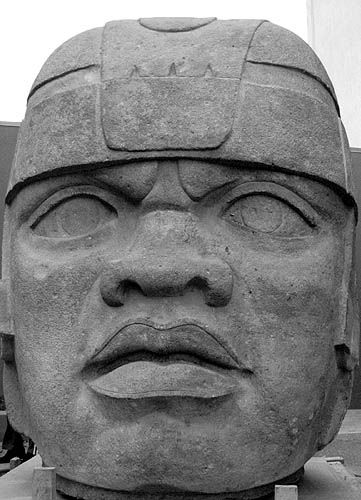
  • The Olmeca's stone heads are gates to the ancestors' worlds. The heads are Memory Houses for the spirits of warriors, nobles, and kings who crossed the Great Sea in generations past to conquer the lands the Olmeca now rule.

The Fortunes Of Xochiquetzatlan

Xochiquetzal by Dragonfly929

The city-realm of Xochiquetzatlan is under the sway of the goddess Xochiquetzal and her consort Xochipilli. Xochiquetzal and her consort are associated with fertility, flowers, butterflies, romance, love, lust and life. Like many deities worshiped in the Sixth World, they are have dualistic aspects; in the case of these two deities, they are those of being the twin sources of life and the twin fonts of excess and filth. The abundant and decadent Living City that names itself after the goddess and her consort very much mirrors their dual aspects.

Xochiquetzatlan's people are experts at terraforming. The Living City has developed the most extensive chinampa system in the Sixth World. As a result of this system, the city produces a great agricultural surplus. Some of this surplus is rendered as tribute to the Olmeca. However, these food-tributes do not usually impose great hardship on the city's peasant producers. The agriculture here is that abundant.

While the Living City has temples to many of the gods worshiped in the Sixth World, the greatest temples in the city are those of Xochiquetzal and Xochipilli. These temples play a central role in guaranteeing both the city's rich harvests, and the fertility and health of its population. The people of the city are the picture of perfect health; people of all social classes are unusually beautiful and lacking in physical imperfections.

The temples' influence on life here also promotes hybridity and mutation, and as well as morphogenetic and phylogenetic proliferation in the animal sphere. Temple naturalists are identifying new species all the time. The temples are responsible for the existence of more than a few ab-humans, summoned creatures, and flower-creatures* in the Living City as well. Many of these are temple-summoned beings and magical creations derived from human and animal stock.

Many are slaves.

The temples derive significant revenue from the trade in ab-humans, summoned creatures, and flower-creatures. But they may become the city's downfall. Every year, the peasants become more and more dependent on their help, as the chinampa network expands ever-further into the great lake at the heart of the Living City. And these abject populations are restless and unhappy. The entire order of the Living City may change if such being rebel against their masters.

*Special beings, often hybrids and chimera, bred and conjured by the sorcerer-priests of the Temples of Xochiquetzal and Xochipilli.


The Fortunes of Xochiquetzatlan
  • VirtueFertility - Growth
  • Fault: The Satyr - Indulgence
  • Fate:  The Cockatrice - Corruption vs. Recovery


Wednesday, April 17, 2013

The Underworld In The Xeno-Meso Setting

The Lords of Xibalba IDrawing by Milton Sobriero, Color by Felipe Sobriero

The Underworld in the Xeno-Meso setting of the Sixth World is similar to the chaotic, fluid Mayan underworld of Xibalba.  It is a far more disorderly place than the Aztec's more lawful and orderly place of the dead, Mictlan. Nobody comes to the Underworld in Xeno-Meso expecting a fair, predictable, orderly place of judgement. They expect to be tricked, deceived, and mocked. It is a difficult place to get out of, and the world of the living is in a constant state of vigilance against the contamination of the Sixth World by things from the Underworld.

The Underworld in Xeno-Meso is a chaotic, fluid network of spaces. Far from a straightforward place of stillness and death, the place has a life of its own. You can enter the Underworld from almost any cave that continues underground for some time. A sure sign you are on the right path is that the deeper you go, the more mud and water you encounter. Eventually the journeyer will encounter underground pools, lakes, and rivers.

The rivers transform from water into flows of scorpions and centipedes, pus, and blood. Eventually one encounters places where the rivers cross. There will be outposts, temples, fortifications, palaces, places of trial and torture, banquet halls, and ball courts in places like these.

And the Lords of the Underworld themselves.

Once upon a time, the Lords of the Underworld were unified and hierarchical. That was long ago, before the Hero Twins descended into the Underworld and sowed disarray among the Lords there.  Now each place in the Underworld where rivers cross is a node in an ever-shifting network of monsters, demons, and Lords. Each node enters into alliances with others, and these constantly change.

The Lords of the Underworld have no permanent allies or enemies, only permanent interests. Those who would bargain or trade with them should keep this in mind.

***

The Underworld is unmappable. Or at least the maps change very frequently, so check your guidebooks often. There are spells which facilitate this fluidity, and help to expand the reach of the Underworld, such as the one which follows.


OGL MECHANICS

Invocation of the Dark Whirlpool
Spell Level: Cleric, 5th Level
Range: Touch (requires egg, see below)
Duration: Permanent

The caster recites a prayer to the Lords of the Underworld, while holding an Egg from one of the Underworld Lords' minions. Once the Incantation is completed, which takes 3 turns, the Egg is placed in an underground pool of water or an underground stream. A continuous stream of scorpions or centipedes, puss or blood flows out from the Egg, and seeks to connect with the nearest node of Underworld life-energy.

The stream radiates out 1d100' per hour until it connects to another node. Each time the Invocation is cast, another stream of the same kind radiates out from the Egg in search of another node. Once the Egg has connected to three nodes, it will form a pool of the same substance with a width of 3 + 3d12 feet and a depth of 1d6 feet.

With each Invocation thereafter, the caster may either expand the pool by a similar amount (i.e., roll again to increase the pool's width and depth) or the new node sends out another river of the same substance in search of another node.

Dispel Evil may be used to reduce or eliminate the node and/or interrupt the flow of a stream.

Monday, April 15, 2013

The Temple Of The Netted Jaguar

Netted Jaguar

When the invaders destroyed the Fifth World, a few hundred priests, jaguar knights, coyote knights, pochteca, and royal by-blows entered the Temple of Tezcatlipoca in Tenochtitlan and never came out. Deep below the temple, the high priest of Tezcatlipoca spoke into the glass of a Smoking Mirror Engine, and opened the gate to a Sixth World. Once all had passed through the mirror, the gate closed, tipped forward and shattered into a thousand obsidian shards.

The refugees stepped forth into a Mirror Gallery deep beneath the Temple of the Netted Jaguar - a temple much like the one they knew in the dead city of Teotihuacan, birthplace of the gods. They cleared ancient rubble and ascended steep stairs onto the temple's platform. They saw the abandoned city, the birthplace of the gods, surrounded on all sides by a huge living megalopolis.

The living city reminded them of the Tenochtitlan they had fled. But unlike that island city, all the lands surrounding the lake had also been built out. And the entire lake was ringed with chinampas, with even more great causeways extending from all sides of the lake toward the Living City at its center.

Tenochtitlan

The city itself was impossibly ancient and decadent. Their people spoke a tongue similar to the refugees, and their gods were similar as well. They wandered the Living City, listening to the people. They learned the name of the city was Xochiquetzatlan, the city that the goddess Xochiquetzal ruled with her male consort Xochipilli. A lush city, whose chinampas fed the lands to the south. A soft city, content to hand over a small portion of its surplus to the Olmeca as a tribute payment for peace.

The new arrivals retreated to the abandoned city of Teotihuacan. The priests and jaguar knights conferred with the royal by-blows. This Sixth World looked ripe for conquest. They began with a plan to take this city of Xochiquetzatlan. Then they would deal with the Olmeca.

But their first step was to build a camp, and soon enough a stronghold in the dead city of Teotihuican. From there, they could begin to exert their power in the Living City, and explore this Sixth World.